Introduction
Search engines have evolved significantly beyond matching keywords with web pages. Google and other search systems increasingly try to understand people, businesses, places, products, services, and how they relate.
This is where Entity SEO becomes important.
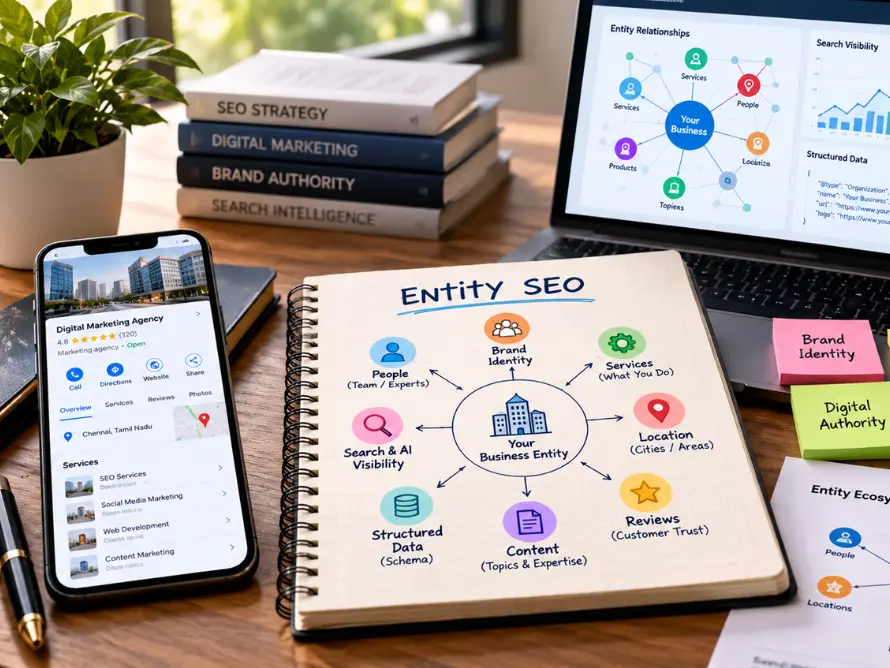
Instead of focusing only on ranking a keyword such as “best SEO company in Chennai,” Entity SEO focuses on helping search engines understand who Webdoux is, what it does, where it operates, what services it provides, and how it relates to other recognised entities.
For businesses competing in traditional search and AI-powered search experiences, building a strong entity presence can become an important part of a modern SEO strategy.
What Is Entity SEO?
Entity SEO is the practice of optimising a website and its digital presence so search engines can accurately identify, understand, and associate a business, person, product, service, or organisation with relevant topics and attributes.
An entity is something that can be distinctly identified.
Examples include:
- A company
- A hospital
- A doctor
- A city
- A product
- A university
- A restaurant
- A software platform
For example, Webdoux is not simply a website targeting the keyword “SEO company.” It is a business entity associated with digital marketing, SEO, web development, social media marketing, and related services.
Entity SEO aims to make those relationships clearer and more consistent.
Why Is Entity SEO Important?
Traditional SEO often focuses heavily on keywords, backlinks, and technical optimisation. These remain important, but search engines increasingly rely on entities and relationships to understand information.
Strong entity signals can help search engines establish:
Who you are → What you offer → Where you operate → What you are known for → How you are connected to relevant topics
This can be particularly useful for local businesses, service companies, healthcare organisations, educational institutions, SaaS companies, and other brands competing for visibility.
Entity-focused optimisation can also support visibility across different search experiences, including traditional search results, knowledge panels, local search, and AI-generated answers.
1. Establish a Clear Brand Identity
The first step is making your business information consistent across the web.
Maintain consistent:
- Business name
- Website
- Address
- Phone number
- Logo
- Business description
- Social profiles
Avoid using significantly different versions of your company name across important platforms.
Consistency makes it easier for search engines to connect different references to the same organisation.
2. Create a Strong About Us Page
Your About Us page should clearly explain your organisation.
Include information such as:
- Company history
- Services
- Areas served
- Expertise
- Team information
- Business location
- Industry experience
- Contact information
A detailed About Us page gives search engines and users additional context about the organisation behind the website.
3. Build Dedicated Service and Topic Pages
Entity SEO works best when your website clearly demonstrates the relationship between your business and its areas of expertise.
For a digital marketing company, this could include dedicated pages for:
- SEO Services
- Local SEO
- Technical SEO
- Content Marketing
- Social Media Marketing
- Web Development
- E-commerce SEO
Each service page should provide genuinely useful information, not just repeat keywords.
4. Use Structured Data
Structured data helps search engines understand entities and their relationships.
Businesses can implement relevant schema such as:
- Organization
- LocalBusiness
- Person
- Service
- Product
- Article
- BreadcrumbList
For example, Organization structured data can provide search engines with information about a company's name, logo, website, and other relevant properties.
Schema should accurately represent information available on the website and follow search-engine guidelines.
5. Strengthen Your Google Business Profile
For local businesses, Google Business Profile is an important part of entity visibility.
Keep information updated, including:
- Business category
- Location
- Opening hours
- Phone number
- Website
- Services
- Photos
Encourage genuine customer reviews and keep business information consistent across relevant local directories.
6. Build Digital Authority Through Mentions
Entity authority isn't created by your website alone.
Search engines can encounter your business through:
- Industry publications
- Business directories
- News websites
- Partner websites
- Professional profiles
- Social platforms
- Interviews
- Events
- Local publications
Relevant, trustworthy mentions can help establish connections between your brand and its area of expertise.
The objective should be to earn credible references, not create artificial mentions everywhere.
7. Connect Related Entities Through Content
A strong content strategy should demonstrate relationships between your business, services, topics, locations, and people.
For example, a Chennai-based SEO company could create content around:
SEO → Local SEO → Chennai → Google Business Profile → Technical SEO → Content Marketing
Internal linking can help users and search engines discover these relationships.
This creates a structured topical ecosystem, not a collection of unrelated blog posts.
8. Optimise for People Also Ask and Conversational Queries
Users increasingly search using complete questions instead of short keywords.
Create content answering questions such as:
- What is Entity SEO?
- How does Entity SEO work?
- Why are entities important for SEO?
- How can businesses build entity authority?
- What is the difference between keyword SEO and Entity SEO?
Clear question-and-answer sections can make content easier to understand and potentially useful across different search features.
9. Build Author and Expert Entities
For websites that publish expert content, clearly identify the people behind it.
Author pages can include:
- Name
- Professional role
- Experience
- Areas of expertise
- Qualifications
- Published articles
- Professional profiles
For industries such as healthcare, finance, law, and technology, demonstrating who created or reviewed content can provide valuable context for users.
10. Monitor Brand Mentions and Search Visibility
Entity SEO is an ongoing process.
Monitor how your organisation appears across:
- Google Search
- Google Business Profile
- Industry directories
- News publications
- Social platforms
- AI-powered search experiences
Look for inconsistencies in business information and identify opportunities to strengthen your brand's association with relevant services and topics.
Entity SEO vs Traditional SEO
Traditional SEO often asks:
“Which keywords should this page rank for?”
Entity SEO asks:
“What does this business represent, and how can search engines understand its relationships and expertise?”
These approaches aren't mutually exclusive. Keyword targeting, technical SEO, content, links, local SEO, and Entity SEO can work together as part of a broader search strategy.
Conclusion
Entity SEO represents an important evolution in search optimisation. Search engines need to understand not only the words on a page but also the entities, relationships, context, and expertise behind those words.
Businesses can strengthen entity signals by maintaining consistent brand information, creating authoritative service content, using appropriate structured data, developing topical relationships, earning credible mentions, and building a strong local presence.
For businesses preparing for the future of Google Search and AI-powered discovery, consider building entity authority alongside traditional SEO not as a replacement for it.
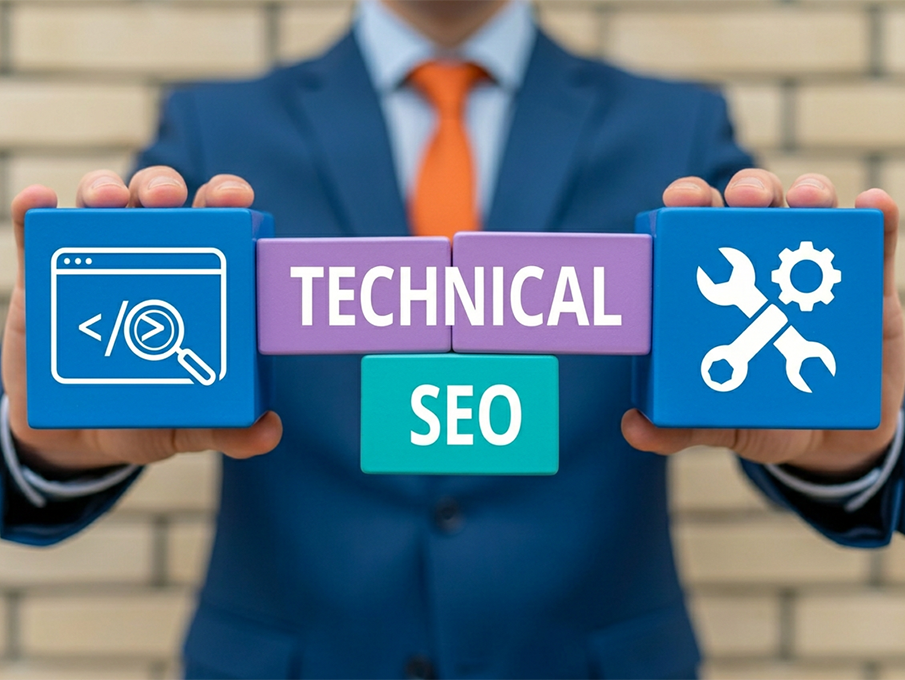
Webdoux can help businesses build a structured search visibility strategy combining Technical SEO, Entity SEO, Local SEO, AEO, content optimisation, and digital authority building.
Latest Posts